

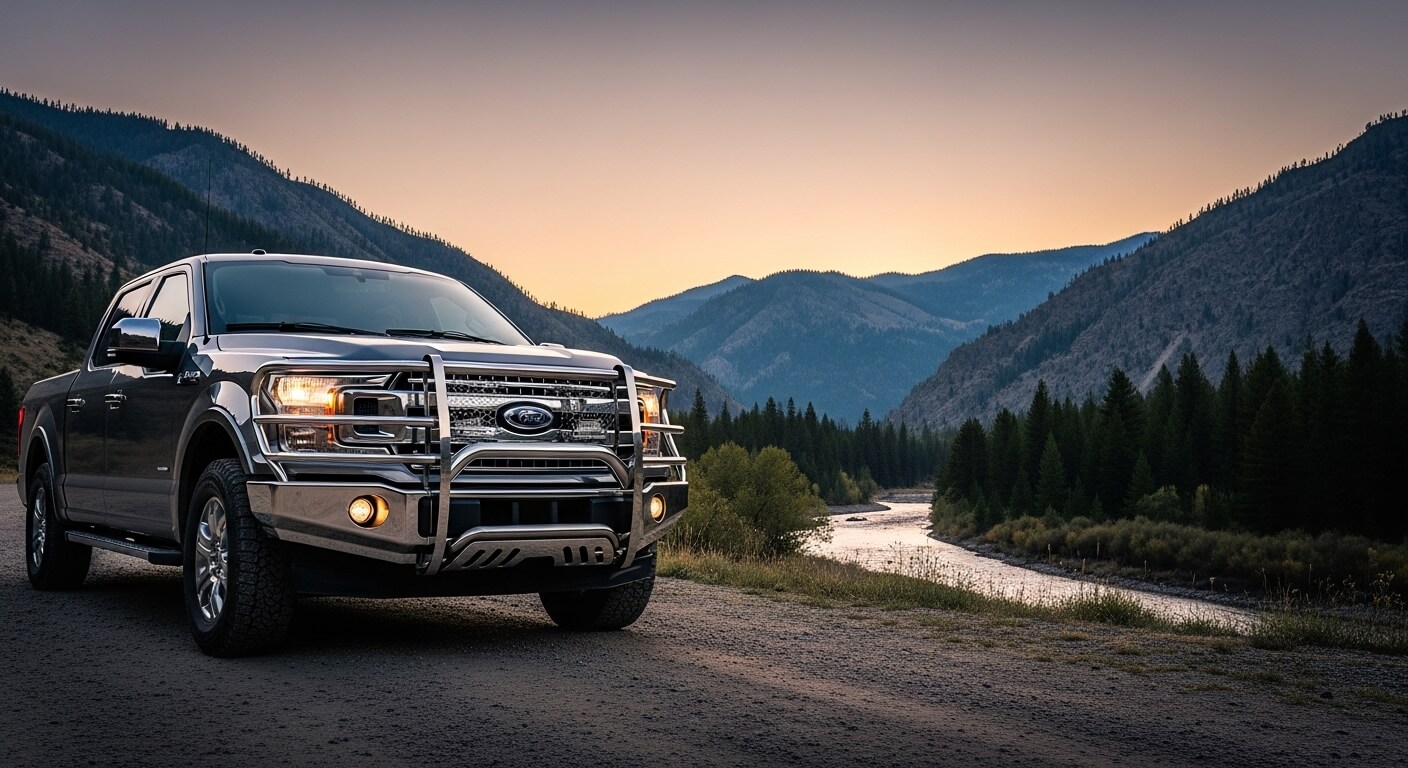
You don’t throw a bull bar on a Ford F-150 just to make the front end look tough, even though, let’s be honest, that part does matter more than people say out loud. You buy one because gravel trucks exist, parking lots are chaotic, and sooner or later something taps your bumper when it really shouldn’t. The F-150 already carries weight visually, so a flimsy front bumper guard or thin-wall truck bull bar feels wrong almost instantly, like cheap boots with a good suit. I went through fitment charts, steel gauge debates, install photos taken in bad lighting, and those brutally honest owner comments that only show up after months of use. One option kept landing in the middle of all that noise, not flashy, not overbuilt, just right. The AUTOSAVER88 Bull Bar makes sense because it hits that balance point: solid steel construction, clean bolt-on mounting that doesn’t turn into a weekend-long fight, and real everyday durability that protects the truck without rattles, weird vibrations, or making your F-150 feel like a rolling experiment.
Best 5 Bull Bars for Ford f150
01. AUTOSAVER88 Bull Bar
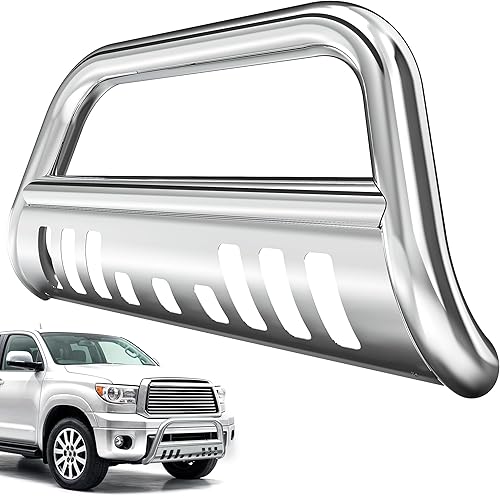
This AUTOSAVER88 stainless chrome bull bar isn’t pretending to be subtle, and honestly it shouldn’t. It’s built for big noses and wide stances like the Ford F-150, Ford Expedition, and other full-size trucks that already take up space before you add anything to the front. The whole three-tube grille guard setup feels intentional, like it was made to deal with brush, kicked-up road junk, shopping carts with a grudge, and those moments where the stock bumper suddenly feels… optimistic. Heavy-duty stainless chrome steel gives it that hard shine that catches light fast, but more important, it adds real front-end defense instead of just decorative metal pretending to help.
The install story is mostly friendly, which matters more than marketing photos ever admit. It’s a bolt-on design, hardware included, no cutting, no welding sparks flying at midnight. If you’ve turned a wrench before or survived a weekend garage project, it’s manageable without turning your driveway into a regret zone. A lot of owners end up adding LED light bars or auxiliary lights using the pre-drilled mounting points, which quietly turns this into more than just a bumper guard. One thing worth slowing down for, though, is fitment. Hardware quality and alignment can depend on your exact year and trim, so checking compatibility before ordering saves that post-delivery sigh. Still, as far as balancing protection, install sanity, and that unmistakable truck presence, the AUTOSAVER88 Bull Bar fits the role without trying too hard or falling apart under real use.
Pros
- Stainless chrome construction resists corrosion and maintains a bold finish
- Works with additional accessories like LED light bars
- Provides added grille and bumper protection on rugged roads
- Bolt-on fit for popular trucks like Ford F-150 and Navigator
- Enhances truck aesthetic with a beefier front profile
Cons
- Fitment and included hardware quality can vary by unit
- Instructions may be unclear or minimal
- Adds weight to the front end, which might affect fuel use and handling
02. oEdRo Paintable Bull Bar
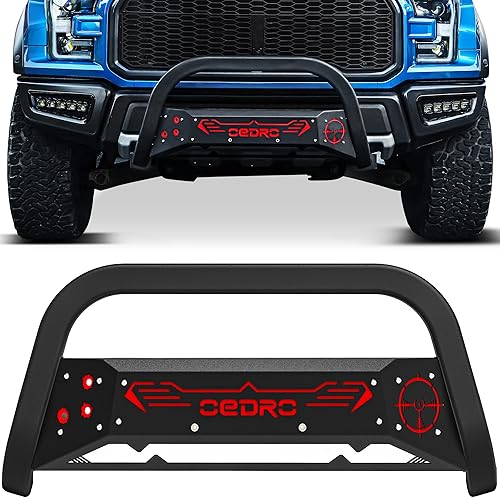
You don’t pick a bull bar like the oEdRo Paintable Bull Bar because you’re bored and scrolling parts at midnight. You pick it because your truck actually works for a living, or at least pretends to on weekends. There’s a difference. This one shows up with solid steel tubing, no hollow-feeling nonsense, and a paint-ready primer finish that basically says, do what you want with me. Match the truck, clash on purpose, go stealth black, go loud, your call. On rigs like the Ford F-150, Chevy Silverado, or Dodge Ram, it adds that squared-off, confident front stance that feels protective without screaming aftermarket desperation. Brush, loose debris, awkward trail edges, job-site chaos, it’s built for those quiet impacts nobody talks about until something bends.
What makes it land well is how little drama it brings. The bolt-on install uses factory mounting points, no cutting, no welding, no inventing new swear words halfway through. Most DIY installs stay honest, basic tools, normal afternoon, done. The open center design doesn’t choke off your factory fog lights, and it leaves room for auxiliary lighting if night driving or back roads are part of your routine. That primer finish is the real sleeper feature though. It’s not locking you into one look forever, it’s waiting for your idea. For drivers who want a dependable front bumper guard with customization baked in and daily-use toughness that doesn’t feel overbuilt, the oEdRo Paintable Bull Bar fits that space cleanly, quietly, and with just enough attitude.
Pros
- Heavy-duty steel tubing with paintable primer finish
- Bolt-on installation uses factory mounting points
- Works with OEM fog lights and room for auxiliary lights
- Adds rugged protection for trucks and SUVs
- Lets you customize the finish to match your vehicle
Cons
- Doesn’t include paint — needs finishing after install
- Not designed for extreme off-road collision protection
- Adds extra weight to the front end, affecting handling slightly
03. Tyger Auto TG-GD6F60098 Front Bumper Guard
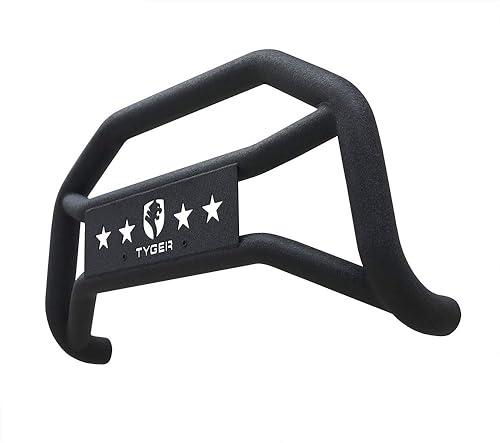
You don’t bolt on something like the Tyger Auto TG-GD6F60098 Front Bumper Guard unless you’re trying to solve a real problem, not just dress the truck up for photos. This one feels built for people who rack up miles, haul stuff that scrapes, and don’t want their Ford F-150 or EcoBoost front end flinching every time gravel pops up or a cart rolls loose in a parking lot. The thick steel tubing has that reassuring weight to it, and the black powder-coat finish doesn’t look shiny-new fragile, it looks ready to get scuffed and keep going. It adds muscle to the front, yeah, but in a way that still feels factory-adjacent, not bolted-on ego.
What stands out is how straightforward it stays. The install is mostly bolt-on using the included brackets, no cutting, no welding, no long pauses where you question your life choices. Once it’s on, the guard sits solid, no weird flex, no nervous rattles at highway speed. A lot of owners end up adding auxiliary lights or small accessories, especially if night driving or early-morning work runs are part of the routine. It’s not pretending to be a full replacement bumper or hardcore rock armor, and that honesty matters. For daily protection, light trail use, and that calm feeling when you load up gear and head out, the Tyger Auto Front Bumper Guard does its job without trying to be something it’s not.
Pros
- Thick steel construction with rugged black powder-coat finish
- Adds real front-end protection for trucks and SUVs
- Straightforward bolt-on install with included hardware
- Works well with auxiliary lighting attachments
- Enhances rugged truck appearance
Cons
- Not designed as a full heavy-duty off-road bumper replacement
- Can add noticeable weight to the front end
- Instructions may be basic and require some mechanical familiarity
04. PARTREE Bull Bar

You don’t bolt on something like the PARTREE Bull Bar unless you actually expect your truck to deal with real-world nonsense. Branches that snap back, loose gravel kicked up by someone else’s tires, those low-speed bumps that happen when workdays run long. Built from heavy steel and finished with a tough powder coat, this front bumper guard feels purpose-made for trucks like the Ford F-150, Ranger, Bronco, and other full-size pickups and SUVs that see more than just grocery-store miles. It adds that solid, planted look up front, the kind that makes the stock bumper feel suddenly underdressed. And if you’re the type who likes things dialed to your own taste, the surface is paint-friendly enough to go custom instead of settling for factory black.
The install doesn’t try to be clever. Factory mounting points, no cutting, no frame mods, hardware included, which matters more than most people admit after the third missing bolt. Once tightened down, the thick steel tubing does its job guarding the grille and bumper area while still leaving room for auxiliary lights, fog lamps, or a light bar if night work or trail runs are part of your routine. You’ll notice the added weight up front, especially if you’re sensitive to steering feel, but that heft is also where the confidence comes from. For truck owners balancing daily driving with rough roads, ranch duty, or weekend dirt time, the PARTREE Bull Bar delivers a tougher front stance and real protection without drifting into overbuilt territory.
Pros
- Thick steel construction with powder coat finish
- Paintable surface for custom color matching
- Protects grille and bumper from brush and trail hazards
- Compatible with auxiliary lighting and accessories
- Uses factory bolt-on mounts
Cons
- Adds significant front-end weight
- Fitment can be tight on some truck models
- Instructions might not feel very detailed
05. Stehlen 733469493105 Bull Bar

You don’t end up looking at the Stehlen 733469493105 Bull Bar unless you’ve already decided steel isn’t always the answer. Sometimes weight matters. Sometimes rust matters. Sometimes you just don’t want to hang a small bridge off the front of your truck. This one comes in with thick aluminum tubing, which sounds lighter because it is, but still feels solid when you really look at it up close. The powder-coat finish helps it shrug off road salt, dust, and the kind of scratches that happen when trails get narrow or job sites get messy. On full-size pickups and SUVs, it adds a sharper, more aggressive front edge without looking like an afterthought bolted on at the last second. It sits comfortably under most factory bumpers and plays nice with parking sensors and fog lights, which honestly matters more than people admit.
The install story is refreshingly boring, in a good way. Mostly bolt-on, factory mounting points, basic tools, no cutting or sparks flying in your driveway. The layout leaves room for LED light bars or auxiliary lights if early mornings or dusty back roads are part of your routine. Just don’t confuse it with a full crash bar meant for heavy impacts, that’s not what aluminum bull bars are for, and pretending otherwise never ends well. This one is about smart protection, lighter weight, and visual presence without overcomplicating your setup. For drivers who want front-end coverage, a tougher look, and fewer install headaches, the Stehlen 733469493105 Bull Bar fits that middle ground cleanly, no drama, no excess.
Pros
- Lightweight aluminum construction keeps weight down
- Powder-coat finish resists corrosion and weather
- Easy bolt-on install with standard hardware
- Allows use with factory sensors and fog lamps
- Can support auxiliary lighting additions
Cons
- Best suited for light-impact protection, not heavy collisions
- Not as strong as steel bull bars for extreme off-road abuse
- Instructions can be basic and somewhat vague
How to actually find the best bull bars for a Ford F-150
You look at your Ford F-150 and think protection, then style, then weight, then somehow you’re back in that grocery store parking lot remembering the exact sound a shopping cart made when it barely touched your bumper. Bull bars live in that mental fog. You don’t fully need one. You don’t fully not need one either. That’s usually how truck mods start, slightly irrational, half justified, already messy.
Why you even bother putting a bull bar on a Ford F-150
A bull bar isn’t just decorative steel cosplay, even if some people treat it that way. You drive a full-size pickup from Ford, mass and presence are already baked in. A bull bar adds front-end protection mainly for low-speed stuff. Parking lots. Tight job sites. That awkward curb you didn’t see. Insurance data keeps pointing out that most vehicle impacts happen under 10 mph, which sounds harmless until a plastic bumper repair creeps past four digits. You wince. You remember.
And yes, looks matter. Anyone who says otherwise doesn’t glance back at their truck after parking. You do. That’s evidence enough.
Materials and the weight you swear you won’t feel (but do)
Steel feels honest. It’s strong. It’s also heavy. Mild steel bull bars can dump 60 to 90 pounds onto the nose of an F-150 depending on tubing and brackets. Aluminum cuts that weight roughly in half. That difference isn’t theoretical. EPA fuel economy research has shown that every extra 100 pounds can shave about 1 to 2 percent off MPG depending on how you drive. You tell yourself that’s nothing. Then weeks later you’re at the pump wondering why range feels shorter.
Stainless steel sits in the middle, corrosion resistant, shiny, heavier than aluminum. Costs more too. And you end up wiping fingerprints off it more than you’d like. Some weeks you don’t even wash the tailgate, so be honest with yourself.
Mounting style and why cheap brackets feel sketchy
Frame-mounted bull bars feel better. They usually are better. Bumper-mounted designs exist, lighter and cheaper, but they rely heavily on factory bumper strength. One wrong curb tap or animal strike and force transfers in ways you didn’t plan for. You don’t want weird forces. Weird gets expensive.
Also pay attention to model year. Many newer F-150 trims use active air shutters and front sensors. A poorly designed bull bar blocks airflow quietly. Engine temps creep up slowly. You blame summer. It wasn’t summer.
Sensors, airbags, and the stuff people scroll past
Modern F-150 safety systems depend on carefully tuned front impact sensors and crumple zones. Toss on a bull bar with bad geometry and you mess with that timing. The Insurance Institute for Highway Safety has shown that poorly engineered aftermarket frontal accessories can alter airbag deployment timing. That sentence feels heavy because it is.
If a bull bar doesn’t clearly mention airbag compatibility, that silence isn’t neutral. It’s a warning dressed as nothing.
Finishes and the slow, boring war with corrosion
Powder-coated black looks tough. It chips. Once it chips, rust moves in like it was invited. Chrome resists rust better but shows scratches like a bad haircut. Stainless steel fights corrosion best, but fingerprints haunt it. Aluminum doesn’t rust, but oxidation dulls the finish over time. You don’t escape problems. You just pick which one you’ll tolerate.
Snow states punish metal. Coastal air punishes everything. Geography matters more than marketing.
Weight distribution and steering feel, yes it changes
Add weight to the front axle and steering response softens a bit. Not dramatic, just noticeable, especially on longer drives or winding roads. Vehicle dynamics studies consistently show that front axle load affects steering feel more than rear load. The truck still tracks straight. It just feels a little lazier.
You think about suspension upgrades. You probably won’t do them right away. That’s fine. Most people don’t.
Price ranges where logic starts slipping
Bull bars for a Ford F-150 range from suspiciously cheap to questionably expensive. Lower-priced ones often skip sensor testing or use thinner tubing. Higher-end options usually bring better brackets, thicker materials, and sometimes integrated skid plates.
Price doesn’t always equal quality. But ultra-cheap almost always equals compromise. You know this. Your cursor still hovers over Buy Now anyway.
Legal stuff nobody checks until it’s a problem
Some states regulate how far frontal accessories can protrude. Pedestrian safety rules exist quietly in the background. Annual inspections might flag sharp edges or excessive extension. You don’t think about this until inspection day. That day is stressful.
Check local rules early. Or ignore them and scramble later. That’s a choice too.
How you decide without losing sleep
Match the bull bar to how you actually use your F-150. City driving and parking lots, aluminum makes sense. Ranch roads and wildlife risk, steel starts to matter. Show truck builds care more about finish quality than tubing thickness.
You’re not chasing perfection. You’re chasing fitment that doesn’t fight the truck.
