

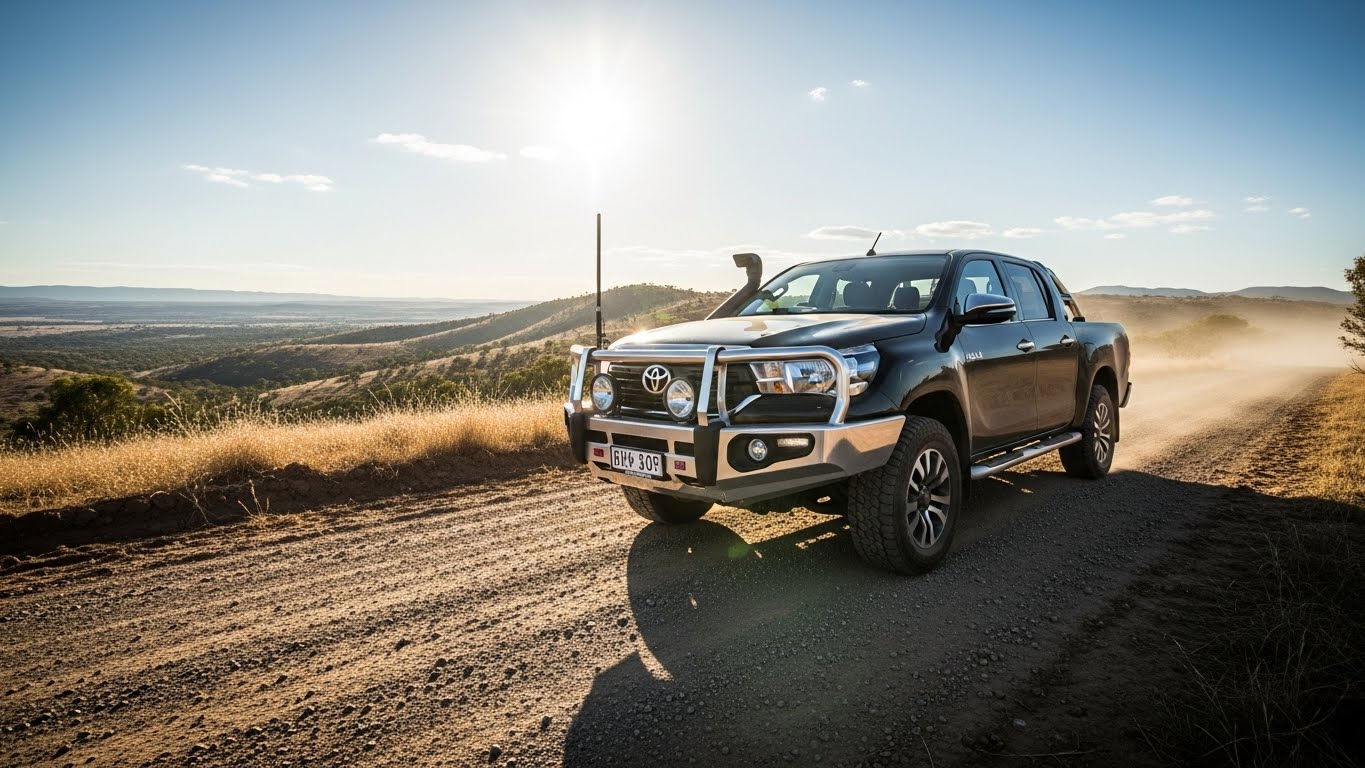
You hear the phrase bull bar and your brain kinda wants a story about bullfights, or some macho marketing guy in a boardroom, right. But the real reason is way more practical, and honestly a bit boring in the best way.
A bull bar is called a bull bar because it started as a barrier of bars on the front of a vehicle meant to deal with one big, rural problem: hitting big animals on the road, especially cattle. “Bull” here is basically shorthand for cattle (not always literally a male bull), and “bar” means exactly what it sounds like, a protective bar / grille / frame bolted up front. The name stuck, even after people began fitting them for looks, lights, winches, and the whole 4×4 vibe.
If you only remember one thing: bull bar = cattle + metal bar. That’s the core of it.
“Bull” means cattle, not bullfighting
In places where the term became common (especially Australia and New Zealand), cattle roaming near roads was not some rare event. On long rural stretches, a loose cow or bull can appear fast, and a vehicle’s grille and radiator are fragile in the dumbest way possible: one solid impact and your trip turns into a long walk.
So the logic went like this:
- Big animal impacts are common enough in rural driving
- The front of the vehicle is expensive and easy to wreck
- Put a sturdy frame up front to take the hit first
That sturdy frame becomes the “bull bar” because it’s for bull sized problems. Even when the more common animal hazard is kangaroos in some regions (hence “roo bar”), the original “bull” label still made sense in cattle country and it travelled well.
Dictionaries that treat bull bar as an Australian term still describe it in that “protect the vehicle from stray animals on outback roads” way, which is basically the whole origin story in one sentence.
The name is old enough that it shows up in everyday ads, not just 4×4 culture
A fun way to check whether a term is “real language” or just modern branding is to look for boring everyday usage. When you start seeing it in classifieds, parts listings, and random “suit HQ Holden” ads, you know it’s already normal.
In Australian newspaper classifieds (Trove archives), “bull bar” shows up plainly in vehicle and parts ads in the 1970s and 1980s. That matters because it tells you the phrase wasn’t invented yesterday by accessory companies. By then, “bull bar” was already treated like a normal item you’d list next to a roof rack or driving lights.
So even if the very first ever usage might go earlier than that (it probably does), we can say confidently the term was already in everyday Australian car talk by the mid-late 1970s.
What bull bars were actually doing on early vehicles
Early and classic bull bars were not subtle. They tended to be simple, heavy steel structures, and they were aimed at a few very specific forms of damage:
- Radiator protection (because a punctured radiator ends your drive fast)
- Grille and headlight protection (because you can’t see at night with a smashed lamp)
- Front panel protection in low speed hits with animals or brush
And there’s also a “remote travel” factor people forget: even when a bull bar doesn’t magically prevent injury, it may prevent the vehicle becoming undriveable in a place where help is far away. That’s part of why they remained popular in rural regions.
Over time, bull bars also became a convenient mounting point for:
- driving lights
- antennas
- recovery gear
- winches on heavier setups
That added utility helped the name survive even when the original cattle story wasn’t front of mind anymore.
Why “bull” and not “cow” or “cattle” bar?
This part is language more than engineering.
- “Bull” is punchy. One syllable, hard sound, easy to say.
- In English, bull often gets used as shorthand for something big, tough, blunt, hard-headed.
- In rural talk, people might say “bull” when they really mean “the cattle out there” depending on context.
So the name works at two levels: it literally points to cattle risk, and it also feels like strength. Not poetic, just sticky language.
Also, once a term becomes the default, nobody wants to rename it. Even if you mostly hit kangaroos or deer or moose in your region, “bull bar” still gets understood.
The term spread, and each place remixed it
Once the idea travelled, different countries and communities slapped their own animal or function onto the name:
- Australia: roo bar, kangaroo bar, sometimes people say nudge bar for smaller ones
- North America: push bar, grille guard, brush guard, moose bumper (yep)
- Europe: often discussed under frontal protection systems rather than the slang name
The point is: the hardware concept is similar, but the name often reflects local hazards and local driving culture. Still, “bull bar” remains one of the most globally recognized labels for the category.
The name survived, but the design and legality got complicated
Here’s the twist: a bull bar is named for animal impacts, but modern debate around bull bars is often about people impacts.
Why it got controversial:
- A rigid bar can change how a vehicle hits a pedestrian or cyclist
- It can reduce the “give” you’d normally get from modern bumpers and crumple behavior
- Regulators started treating them as safety relevant equipment, not just accessories
That’s why you see rules and standards pop up in different places:
- In parts of Australia, guidance references compliance with standards for vehicle frontal protection systems.
- In the EU, there were rules aimed at “frontal protection systems” (bull bar type equipment) to reduce harm to vulnerable road users.
- In India, government circulars have called out crash guards / bull bars as unauthorised fitment with safety concerns and penalties (this is one of those areas where people hear “bull bar” and think “looks tough”, while regulators think “risk to pedestrians”).
So the name stayed simple, but the modern reality got messy.
So why do they call it a bull bar, really?
Because it started as a plain, practical thing:
You’ve got cattle on roads.
You’ve got fragile vehicle fronts.
You bolt a strong bar up front.
You call it the thing it’s meant to deal with.
Then the phrase became normal language, spread across regions, and kept going even when bull strikes were not the only reason people fitted them.
