

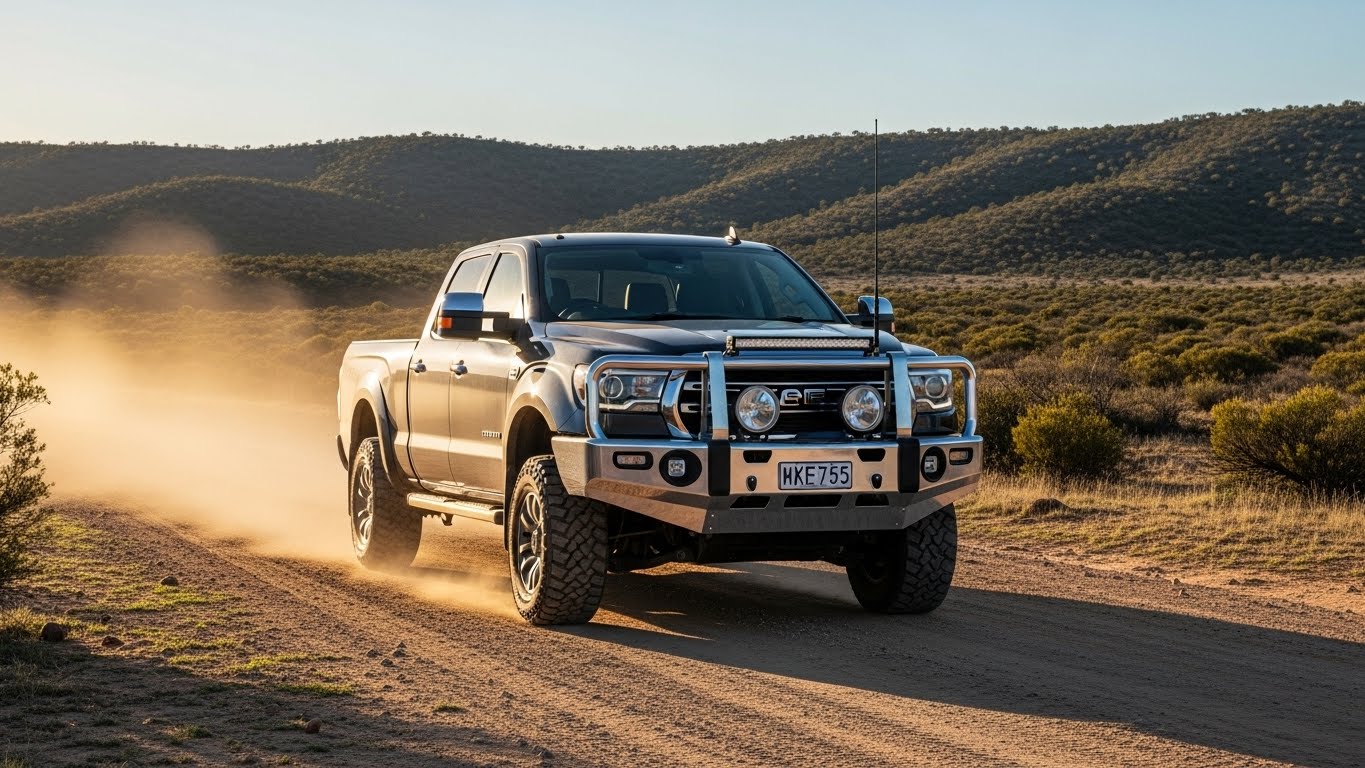
Most of the time, yes, bullbars are legal in the U.S. But the real answer is kind of annoying: legality depends less on a single “bullbar law” and more on (1) how and when it’s installed, and (2) your state’s equipment rules (plates, lights, bumper height, hazardous protrusions, inspection standards, etc.).
Also quick note: people say “bullbar,” but in the U.S. the same thing might get called a bull bar, brush guard, grille guard, push bar, or a full replacement bumper with a hoop. States rarely care what you call it, they care what it does (or blocks).
1) What Washington does, and doesn’t, regulate
There’s no single federal rule that “bans bullbars”
At the federal level, NHTSA’s safety standards (FMVSS) mostly apply to new vehicles and new motor vehicle equipment, and manufacturers self-certify compliance. NHTSA explicitly notes this framework in interpretation letters about brush/grille guards and airbags.
So you don’t have a federal “bullbar permit” or “bullbar approval.” Instead, the big federal issues are about FMVSS compliance at the time of sale and the make-inoperative rule for businesses.
FMVSS bumper standards exist, but they’re not a “bullbar law”
One commonly misunderstood rule is the federal Bumper Standard (49 CFR Part 581). It sets low-speed damage requirements for certain vehicles, but it’s mainly aimed at vehicle design in the new-vehicle market. It also has a limited scope (for example, it applies to “passenger motor vehicles” and excludes “multipurpose passenger vehicles” as defined in the regulation).
That matters because a bullbar can change how the front end behaves in a low-speed impact, but Part 581 isn’t a simple “your aftermarket bullbar is illegal” trigger by itself.
The biggest federal hook: the “make inoperative” rule (and who it hits)
Federal law says a manufacturer, distributor, dealer, rental company, or motor vehicle repair business may not knowingly “make inoperative” any required safety device or design element installed to comply with an applicable safety standard (49 U.S.C. § 30122).
This is the key practical point:
- If a shop/dealer installs a bullbar in a way that interferes with airbags, crash sensors, lighting equipment required by FMVSS, etc., that business can have a federal problem.
- NHTSA interpretation letters on bumper/brush/grille guards repeatedly warn they can alter crash pulses or sensor loading and potentially cause unintended airbag behavior (deploy too easily, too late, or not as designed).
And here’s the twist that surprises people:
- NHTSA has also said the make-inoperative rule generally does not apply to modifications vehicle owners make to their own vehicles (states can still regulate those owner mods).
So federally, bullbars are not “illegal,” but how they’re installed (and by whom) can create legal exposure.
Aftermarket bullbars are “motor vehicle equipment” (defect recall risk)
NHTSA also flags that a bumper guard would be considered “motor vehicle equipment,” and if it has a safety-related defect, the manufacturer could face recall obligations.
That’s not about street legality day-to-day, but it is part of the federal landscape.
2) The state layer: where bullbar legality is actually decided
States control what equipment is allowed on vehicles operating on their roads, and most states do it through broad categories instead of one “bullbar statute.”
Here are the rules bullbars most commonly run into.
A) License plate visibility and mounting height
A bullbar that blocks a front plate (in a front-plate state) can get you cited or fail inspection. California, for example, requires plates to be securely fastened, clearly visible, and clearly legible, and it also sets plate height limits.
Florida is an example of a state that gets strict about anything applied onto or around a plate that interferes with legibility, angular visibility, or detectability.
Even if your bullbar is otherwise fine, blocking the plate can make the whole setup effectively “not legal.”
B) Lighting visibility (headlights, turn signals, marker lamps)
Many states enforce “no obstruction” indirectly through equipment rules and inspection criteria. Practically, if your bullbar blocks:
- headlights or fog lamps
- front turn signals
- required reflectors
…you can get cited or fail inspection. (And if a shop installs it in a way that undermines compliance with required lighting equipment, you can loop back into federal “make inoperative” issues for that shop.)
C) Bumper height and bumper “zone” rules
Some states specify where a bumper must sit off the ground and how far it can extend. Pennsylvania is a clean example because its inspection regulations spell out bumper requirements including:
- no broken/torn/protruding portions that create a hazard
- bumper may not extend beyond the body line or be longer than original equipment (whichever is greater)
- and a bumper height zone (for passenger vehicles, some part of the main horizontal bumper bar must fall within 16–20 inches above ground).
If your bullbar functions like a bumper extension or effectively becomes the most forward “bumper-like” structure, those rules can matter fast.
D) “Hazardous protrusions” and sharp edges
A lot of states treat this as a safety issue rather than naming bullbars. New Jersey’s inspection regulations, for example, say certification shouldn’t be refused just because a bumper has sharp/protruding parts if they don’t pose a risk of injury, but the motorist should be advised to correct it.
Translation: sharp, pointy, jagged, broken metal is where you get in trouble. Smooth radiused tubing and properly finished edges generally avoid this issue.
E) State inspections (where they exist)
If you’re in a state with safety inspections, bullbars get judged like any other equipment:
- secure mounting
- no dangerous projections
- no interference with lights/plate
- sometimes bumper height compliance
Inspection rules can be stricter (or at least more consistently enforced) than day-to-day traffic stops.
3) Real-world: what “legal” usually looks like
In normal use, a bullbar is typically treated as legal if all of this is true:
- It’s securely mounted and not damaged or jagged.
- It doesn’t block your plate (or you relocate the plate legally).
- It doesn’t block required lights/reflectors.
- It doesn’t push you out of bumper height/extension limits (this is very state-specific).
- If installed by a business, it doesn’t “make inoperative” safety systems like airbags/crash sensors.
When people get told “bullbars are illegal,” what’s often happening is one of these: plate blocked, turn signals blocked, sharp protrusion, or it’s mounted in a way that raises safety concerns.
4) A practical checklist you can use in any state
If you want the quickest reality check, do this:
- Plate test: stand 10–20 feet in front of the vehicle. Can you read the plate clearly and is it mounted where your state requires?
- Light test: confirm headlights, turn signals, and side markers aren’t partially blocked from normal viewing angles.
- Protrusion test: no sharp edges, broken welds, torn metal, or pieces that stick out like a hook.
- Bumper-zone test (lifted trucks especially): check whether your state ties bumper height/coverage to a specific range. Pennsylvania’s 16–20 inch rule shows how specific this can get.
- Sensor reality check: if your vehicle has modern ADAS sensors behind the grille or in the bumper, a bullbar can mess with them even if it’s “legal.” (Not always illegal, but can create safety and insurance headaches.)
- Installer risk: if a shop installs it, make sure they’re not creating an airbag/sensor conflict. NHTSA has explicitly warned guard designs can affect airbag deployment behavior depending on design and mounting.
5) Bottom line
Bullbars are generally legal in the United States, but the legality is usually determined by state equipment rules and how your specific bullbar is set up. Federally, the biggest concern is not a ban, it’s whether a commercial installer “makes inoperative” safety systems, and NHTSA has repeatedly warned that brush/grille/bumper guards can affect airbag performance depending on design and mounting.
