

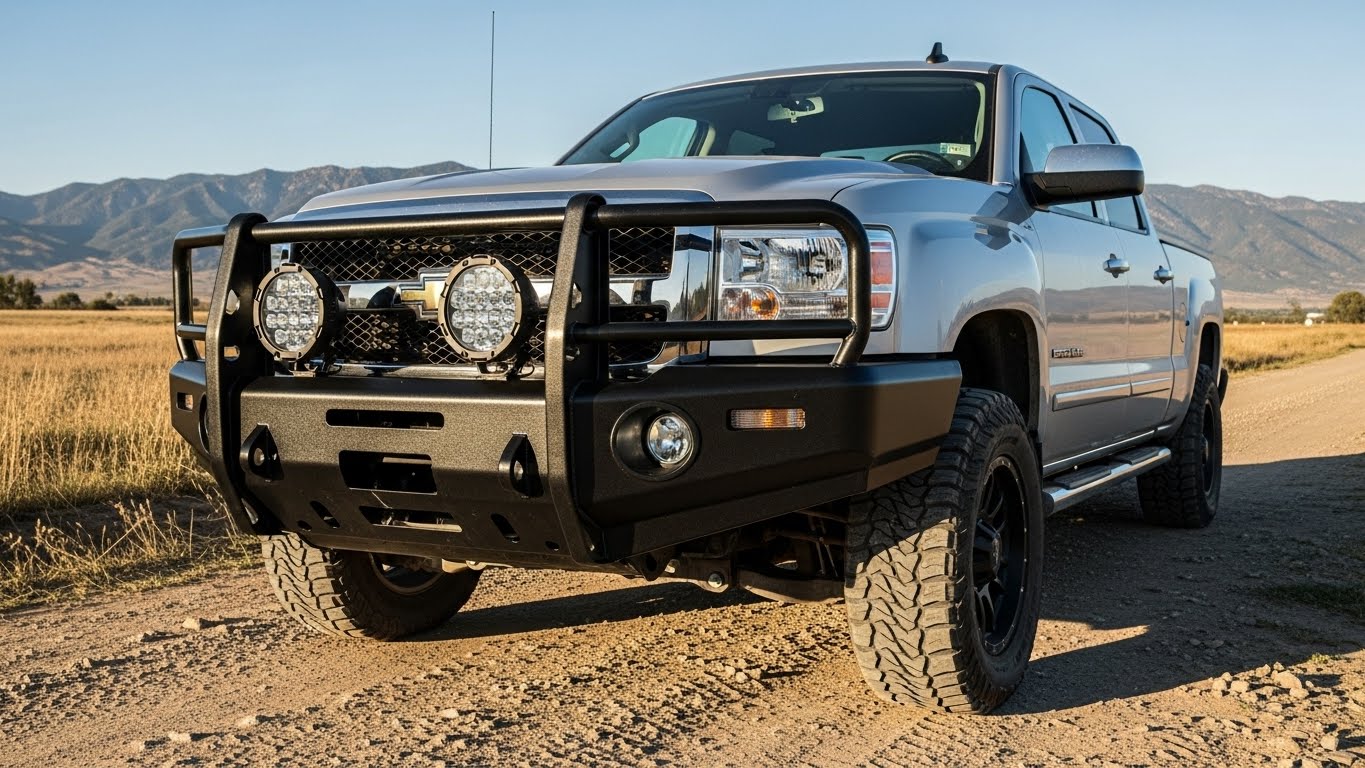
You keep hearing mixed stuff about bull bars, and honestly your head probably hurts a little. One guy swears it saved his truck, another says it ruined the whole front end, and then someone else throws in a story about airbags going wild for no reason. So you sit there wondering, does a bull bar help in a crash or is it just metal confidence bolted to the bumper.
What a bull bar is actually meant for, not what people hope
You need to understand one thing early, and most folks skip this part. A bull bar was never really born for modern crash safety. It came from rural driving, livestock hits, kangaroos in Australia, deer on dark roads, that sort of messy real world stuff. Slow to medium speeds, unexpected impact, animal weight spreads across steel. That was the idea.
When you bolt one onto your SUV or pickup, you are adding a rigid structure ahead of crumple zones. That sounds strong, feels strong, but strength is not always friendly during a crash. Modern vehicles are built to bend in specific ugly ways, on purpose. Engineers lose sleep over millimeters of fold lines. A bull bar doesnt care about those plans, it just sits there.
Low speed bumps, parking lot nonsense, and minor crashes
Here is where you might actually benefit, and yes this part is real. In low speed hits, parking lot taps, rolling into a pole at 8 mph, nudging another bumper in traffic, a bull bar can take the scrape. Your grille stays intact, headlights sometimes survive, radiator doesnt instantly cry. That metal tube absorbs scratches and shallow dents, not energy in a scientific sense but damage, the annoying kind.
Insurance data often shows reduced cosmetic repair costs for low speed incidents when rigid front accessories are present. Not dramatic, not magic, but noticeable. You might walk away with paint scuffs instead of plastic shards on the road. That feels like a win, and sometimes it is.
Higher speed crashes and the physics nobody likes talking about
This is where the story twists and gets uncomfortable. In higher speed collisions, especially head on impacts, a bull bar can actually make things worse. It bypasses or interferes with factory crumple zones. Energy that should be absorbed gradually gets transferred faster into the frame rails and cabin.
Crash testing organizations like Insurance Institute for Highway Safety have repeatedly shown that stiff front end modifications can change crash pulse timing. That affects airbag deployment. Too early, too late, sometimes uneven. Your airbag system expects factory geometry, not aftermarket steel.
At highway speeds, the bull bar doesnt magically protect you like a knight shield. It can cause higher deceleration forces on occupants. That translates to chest loads, neck strain, and internal injuries. Not visible stuff, the kind doctors talk quietly about later.
Pedestrians, cyclists, and why cities hate bull bars
You drive in urban areas more than you think, even if you tell yourself otherwise. For pedestrians and cyclists, a bull bar is bad news. Instead of a relatively forgiving bumper cover, they hit solid metal tubing. Injury severity goes up, studies from Europe and Australia show that clearly, and thats why many regions restrict them.
In the U.S., agencies like National Highway Traffic Safety Administration have issued guidance warning about aftermarket frontal protection systems. Not outright bans everywhere, but caution, lots of it. Cities care about this stuff because it affects people who are not inside the vehicle.
So if you are thinking safety for everyone, not just you, bull bars start looking less heroic.
Off road reality and animal strikes, the context matters
Now shift scenes. Rural highways, forest roads, night driving with deer that appear out of nowhere. In these cases, a properly designed off road bull bar, especially one tested for animal strikes, can reduce penetration into the engine bay. That can keep coolant where it belongs and prevent total loss of vehicle control.
Australian crash research shows reduced engine compartment intrusion during kangaroo impacts at moderate speeds when ADR compliant bull bars are used. That is a specific environment though, not downtown traffic. Context is everything here, and pretending otherwise is where arguments go sideways.
Airbags, sensors, and why install quality actually matters
You might think steel is steel, but mounting style changes everything. Poorly mounted bull bars can block or confuse crash sensors. Some bars are airbag compatible, some just claim it loudly on the box. Compatibility depends on how the bar deforms, not just whether it has a sticker.
Vehicles with radar based safety systems like adaptive cruise or collision warning can also lose functionality. Sensors get blocked, recalibration gets skipped, warnings stop working quietly. You dont notice until the one moment you needed it.
Legal and insurance angles nobody reads twice
Insurance companies dont always love bull bars, even if they dont say it upfront. After a serious crash, modifications can complicate claims. If injury severity increases, adjusters start asking questions. Was the vehicle modified, was it tested, was it compliant. That conversation is never fun.
Some states allow them freely, others regulate height, width, protrusion. You might be legal today and questionable tomorrow after a rule update. It happens more than people admit.
So does a bull bar help in a crash, really
Your answer depends on speed, location, who gets hit, and what you define as help. At low speeds, yes it can save cosmetic damage. In animal strike scenarios, sometimes yes again. In high speed urban crashes, often no, sometimes worse.
A bull bar helps your vehicle look tough, feel prepared, and survive minor nonsense. It does not rewrite physics. It does not guarantee safety. It trades one type of protection for another, and that trade is not always fair.
You dont need to hate bull bars or worship them. You just need to stop believing they are universal safety upgrades. They are tools, not shields, and tools only work when used in the right place, at the right time, with eyes open.
At the end of it, you are choosing between appearance, specific protection scenarios, and potential crash consequences. Not a clean choice, never was, and probably never will be.
